
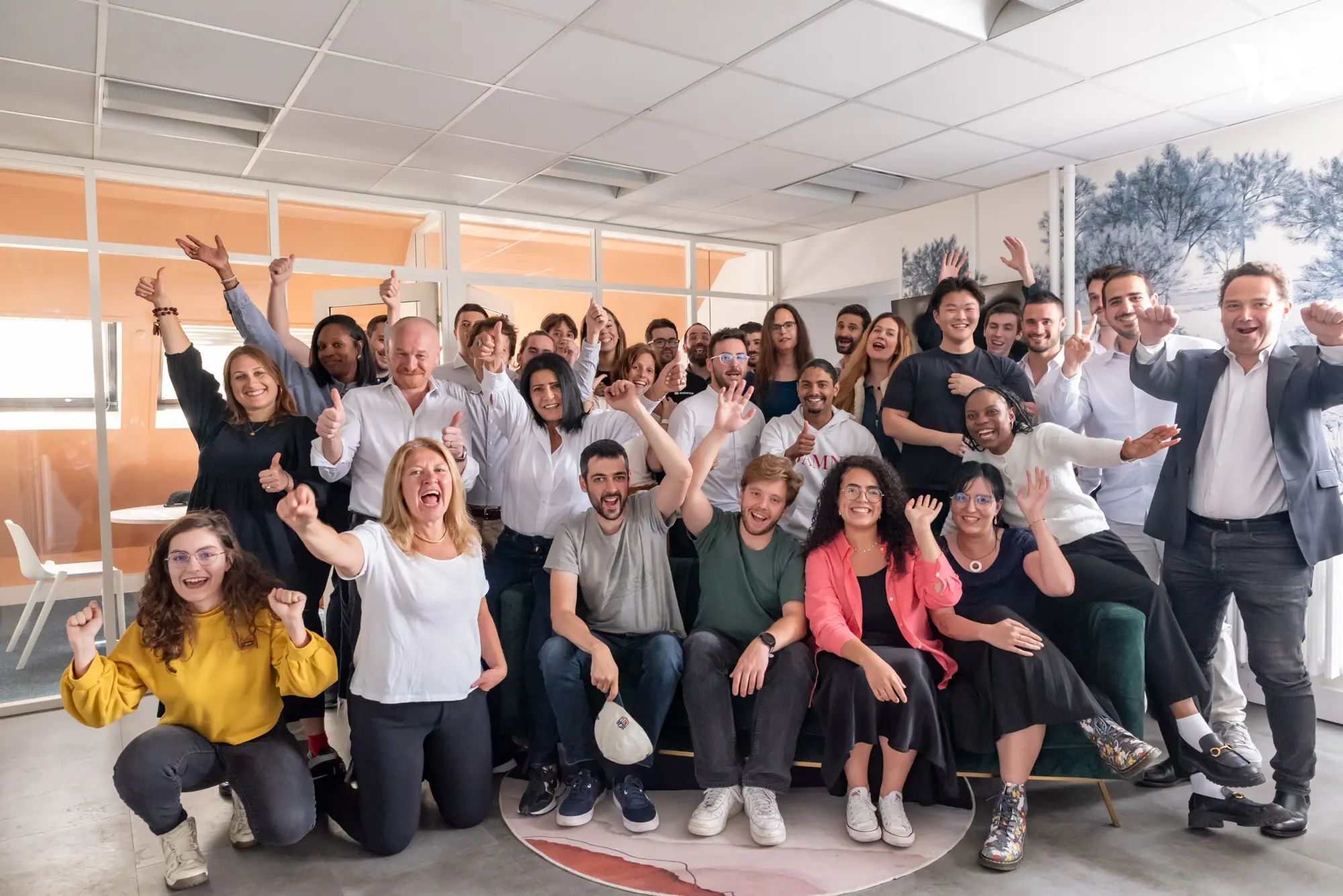
Founded in 2015 in Paris, DialOnce was built on a simple conviction: customer service needed to move beyond rigid, fragmented journeys to become more fluid, clearer, and more efficient. The company first made its mark as a pioneer of visual IVR, rethinking how users could be guided from the very first contact without the constraints of traditional voice-only systems.
As customer expectations and usage evolved, DialOnce expanded its solutions. Visual IVR paved the way for AI agents capable of understanding requests, orchestrating journeys across multiple channels, and supporting customer service teams in handling inquiries, from the simplest to the most complex.
In 2015, DialOnce chose to challenge the traditional IVR. Long, rigid, and poorly suited to mobile usage, it no longer met user expectations or the operational constraints of customer service teams. We therefore designed a more intuitive alternative: the visual IVR built on an embedded SDK.
When an inbound call is received, an interactive interface appears directly on the user’s screen. The request can be expressed simply, using buttons, without having to navigate endless voice menus.
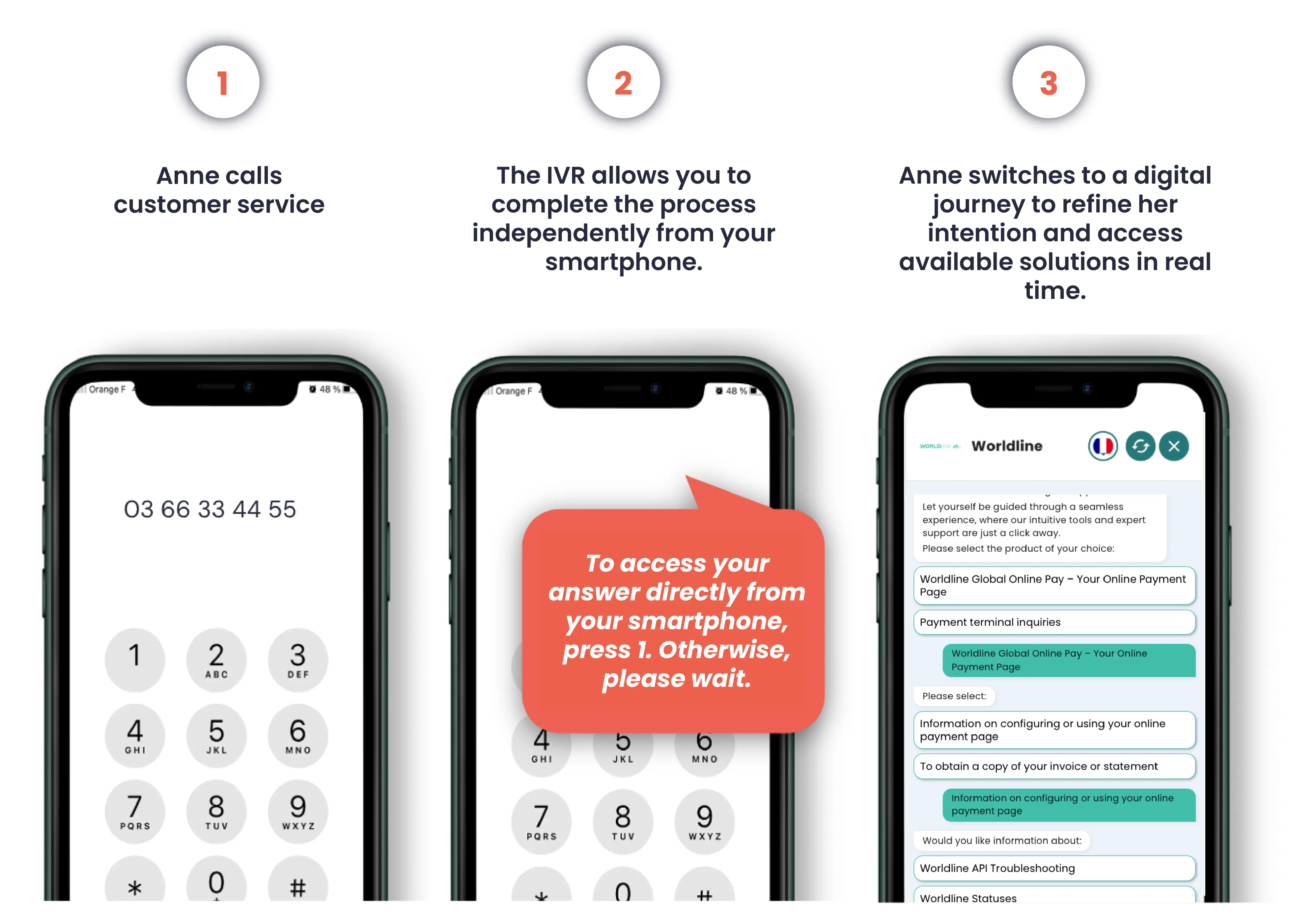
With the Visual IVR, the first contact becomes clearer and more efficient. Routing to the right service happens faster, with fewer errors and, in many cases, without human intervention. This approach is now adopted by major enterprises, particularly in banking, insurance, and energy, and has supported millions of users in their very first interactions with customer service since its launch.
In 2018, changes to Google’s policies rendered the SDK used in the first versions of the Visual IVR obsolete. Rather than slowing innovation, this shift opened a new phase in DialOnce’s evolution.
We then completely revised our approach to customer journeys. The objective was to move beyond a model focused exclusively on voice calls, with SMS and web interfaces now enabling journeys that naturally flow from one channel to another.
DialOnce therefore implemented an SMS- and JavaScript-based redirection system on digital touchpoints, replacing the embedded SDK and initiating the transition toward an omnichannel model.
At the same time, we developed our own internal tools, such as the DialOnce Builder, to structure and automate these journeys. This tool makes it possible to graphically design resolution journeys based on intents, actions, and sequencing rules, without technical complexity.
This milestone laid the foundations of our omnichannel orchestrator, enabling the automatic generation of resolution journeys from predefined configurations, built on identified intents. Journeys were no longer designed channel by channel, but as continuous experiences, able to adapt to context and to the user’s point of entry. Customer relationships began to be organized around an orchestration logic rather than simple flows.
Between 2018 and 2023, DialOnce evolved its solutions by progressively integrating artificial intelligence components to handle growing volumes of interactions and increasingly demanding user expectations. The challenge was no longer just to route, but to understand.
Initially, our journeys relied on structured orchestration intelligence. They were modeled in a deterministic way, based on clear rules and navigation graphs. This approach ensured reliable, controlled automation, perfectly suited to high-volume use cases.
Gradually, we integrated natural language understanding (NLU) technologies. Users were able to express their requests in their own words, without being limited to predefined choices. Intents were identified, responses adapted, and entry into journeys became more seamless.
This evolution took on particular significance during the Covid-19 pandemic. As the surge in inbound interactions put customer service teams under severe pressure, DialOnce solutions made it possible to absorb a significant share of requests while maintaining service continuity and quality.
Customer relationships were no longer based solely on rigid scenarios. They now relied on the ability to understand requests, route them intelligently, and leave the most complex situations to human teams.

From 2023 onwards, the emergence of large language models (LLMs) marked a new phase in the evolution of DialOnce solutions. Expectations shifted, with users seeking more natural, contextualized responses capable of adapting to a wide range of situations. Customer service teams, in turn, were looking to balance automation, reliability, and control.
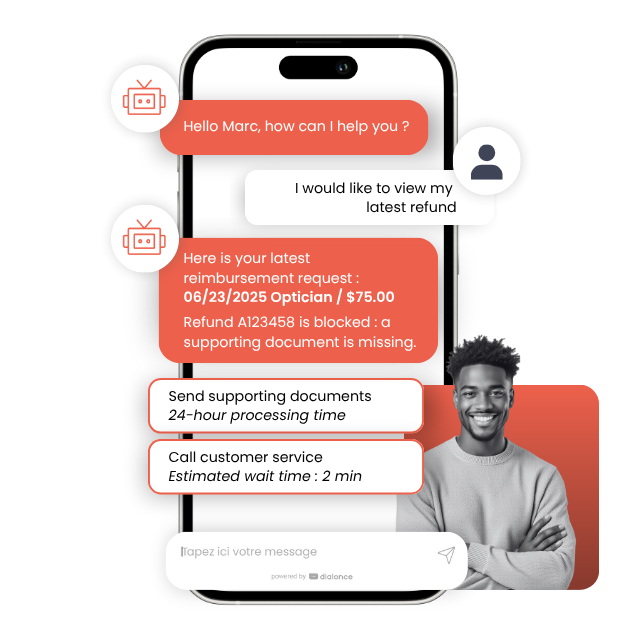
The company then built a dedicated team of data scientists to design an architecture based on the principle of Retrieval-Augmented Generation (RAG) and a hybrid mechanism combining natural language understanding with large language models. This orchestration mechanism enables the AI agent to automatically select the most appropriate way to respond to a request, combining deterministic responses (decision trees, buttons, rules), generative AI responses (LLMs and RAG), business integrations (APIs, Visual IVR, forms, CRM systems), and escalation to a human advisor (chat, phone, email).
This intelligent orchestration makes it possible to handle both simple requests and complex situations without breaking the journey. The AI agent becomes a unified point of entry, capable of orchestrating all customer interaction channels while leaving human advisors a central role in high-value exchanges.
This approach is embodied since 2025 through several complementary AI agents:
In 2026, DialOnce continues to evolve its solutions by fully integrating the challenges of digital sovereignty, regulatory compliance, and data control. These issues have become central for customer service teams, particularly in sensitive and highly regulated sectors.
We are upgrading our infrastructure to rely on French cloud hosting (Scaleway) and on language processing models developed in France (Mistral AI). This choice strengthens processing traceability, data localization, and alignment with European requirements (GDPR and ANSSI), while maintaining a high level of performance.
This approach is part of a responsible vision of artificial intelligence. DialOnce solutions are designed to remain explainable, supervised, and fully under control. AI agents are able to resolve ambiguities from the very first interactions, refine the understanding of requests, and orchestrate customer journeys. This intelligence relies on collaboration between several specialized agents (multi-agent architecture), each intervening at a specific point in the journey to orchestrate the most relevant response and involve a human advisor whenever necessary.
The company has also implemented an interaction evaluation system based on an AI tasked with reviewing a sample of conversations to identify cases of dissatisfaction or inaccuracy and generate improvement recommendations (LLM as a judge). Automation is never deployed at the expense of human oversight, and AI agents are designed as decision-support and orchestration tools, not as black boxes.
In parallel, we integrate principles of technological sobriety. Models are activated selectively based on the complexity of requests, responses rely on verified knowledge, and infrastructures are optimized to limit environmental impact. The company is also a member of La French Tech Grand Paris and Hub France IA.
Today, this approach enables DialOnce to sustainably support customer service teams in managing their contact journeys. It is a continuous evolution, guided by usage, technology, and an unchanged conviction: high-performing customer relationships rely on the right orchestration between automation, intelligence, and human expertise.
"Our mastery of AI and customer relationship topics is a solid differentiator that positions us as a strategic partner for companies looking to elevate their customer relationship management."
Charles Dunston
CEO