
Handle more customer requests without compromising service quality. Reduce repetitive calls, improve reachability, and prevent contact center overload with AI agents designed for customer service.










Contact centers now need to handle higher volumes of customer requests, manage increasingly frequent activity peaks, and meet growing expectations for immediacy, without increasing headcount or compromising service quality.
Deployed across more than 150 projects in banking, insurance, retail, transportation, energy, public services and social housing, DialOnce AI agents help automate simple and repetitive requests to reduce pressure on teams, improve advisor availability and maintain a more consistent level of service, including during peak contact periods.
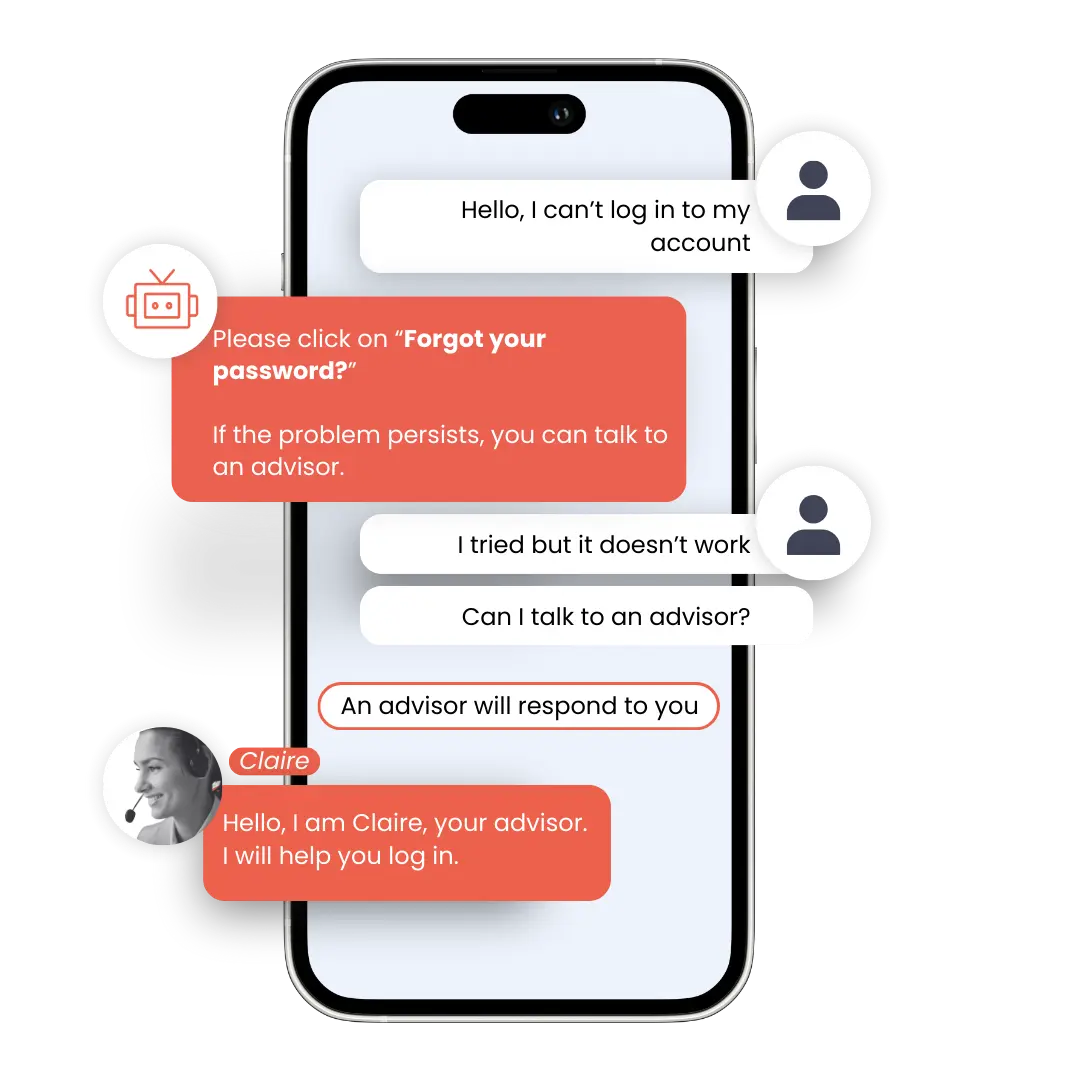
The DialOnce conversational AI agent automates simple requests across websites, WhatsApp, messaging platforms, and customer portals by understanding user intent and routing each request to the most relevant journey while providing responses tailored to the context of the interaction. It helps reduce low-value interactions while improving responsiveness and customer service availability.
| Common Use Cases | Benefits |
|---|---|
| Case tracking | Instant responses |
| Order tracking | Fewer repetitive requests |
| Frequently asked questions | 24/7 availability |
| Information sharing | More consistent responses |
| Self-service processes | More time for complex situations |
"To facilitate the work of our advisors, we chose to offer DialOnce's conversational agent supported by artificial intelligence. This agent was particularly in demand during the Paris 2024 Olympic Games. It sorts incoming requests, and responds to a maximum number of travelers in French and English, reducing contacts by up to 30%."
Gaëtan Bultez
Customer Service Director, RATP
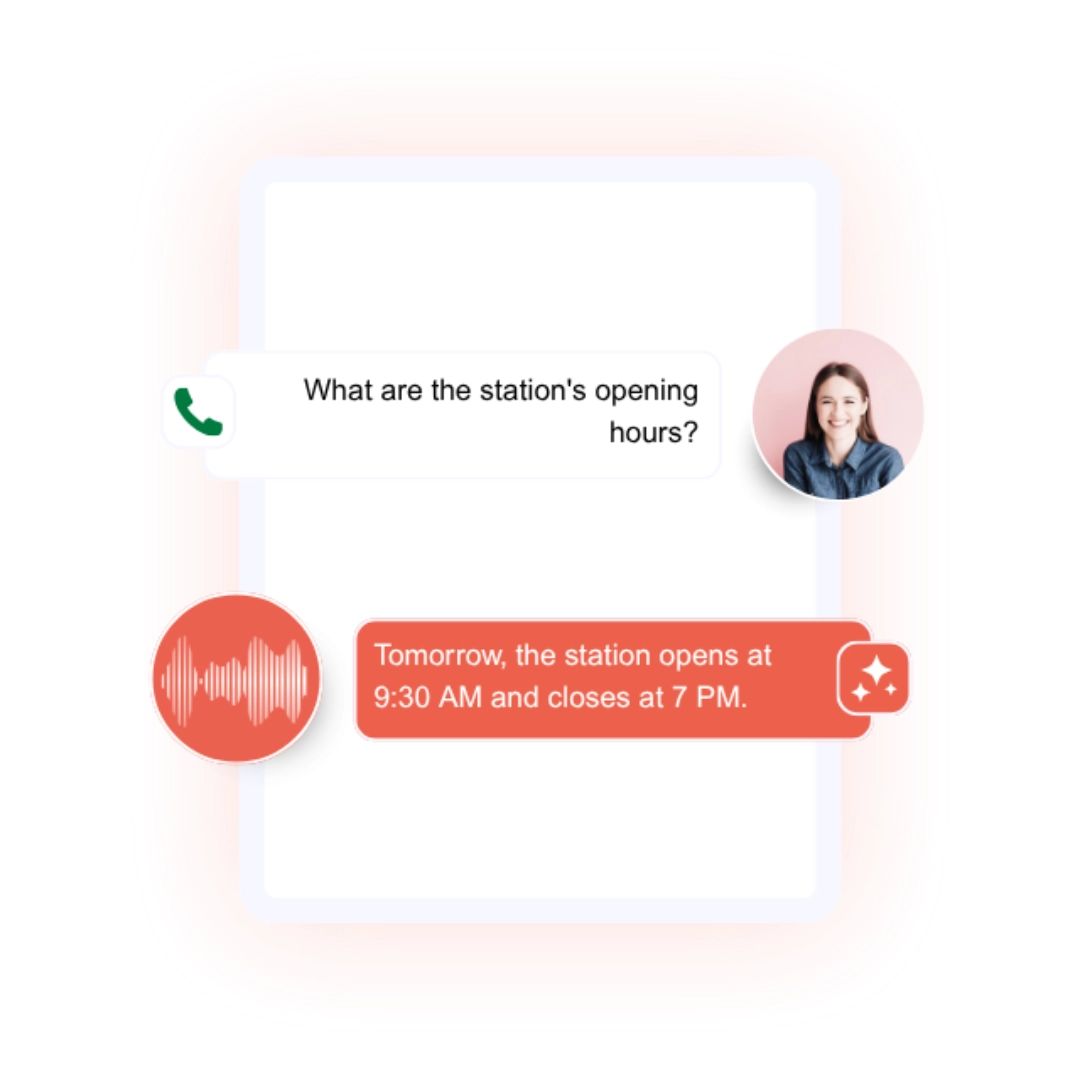
The DialOnce Voice AI Agent automates simple calls through a voicebot capable of understanding requests expressed in natural language, quickly identifying the reason for contact, and routing users to the appropriate resolution path within the first seconds of the interaction. It helps customer service centers streamline incoming call management, reduce unnecessary transfers, and maintain higher availability during peak contact periods.
| Common Use Cases | Benefits |
|---|---|
| Call qualification | Reduced waiting times |
| User guidance | Fast request qualification |
| Recurring information requests | Fewer unnecessary transfers |
| Call overflow management | Reduced phone line saturation |
| Inbound call management | Maintained service quality |
"Users can explain their needs directly without going through multiple menus. Requests are better qualified and transfers are far more efficient."
Marie-Claire Varnier
Customer Service Director, Varolia
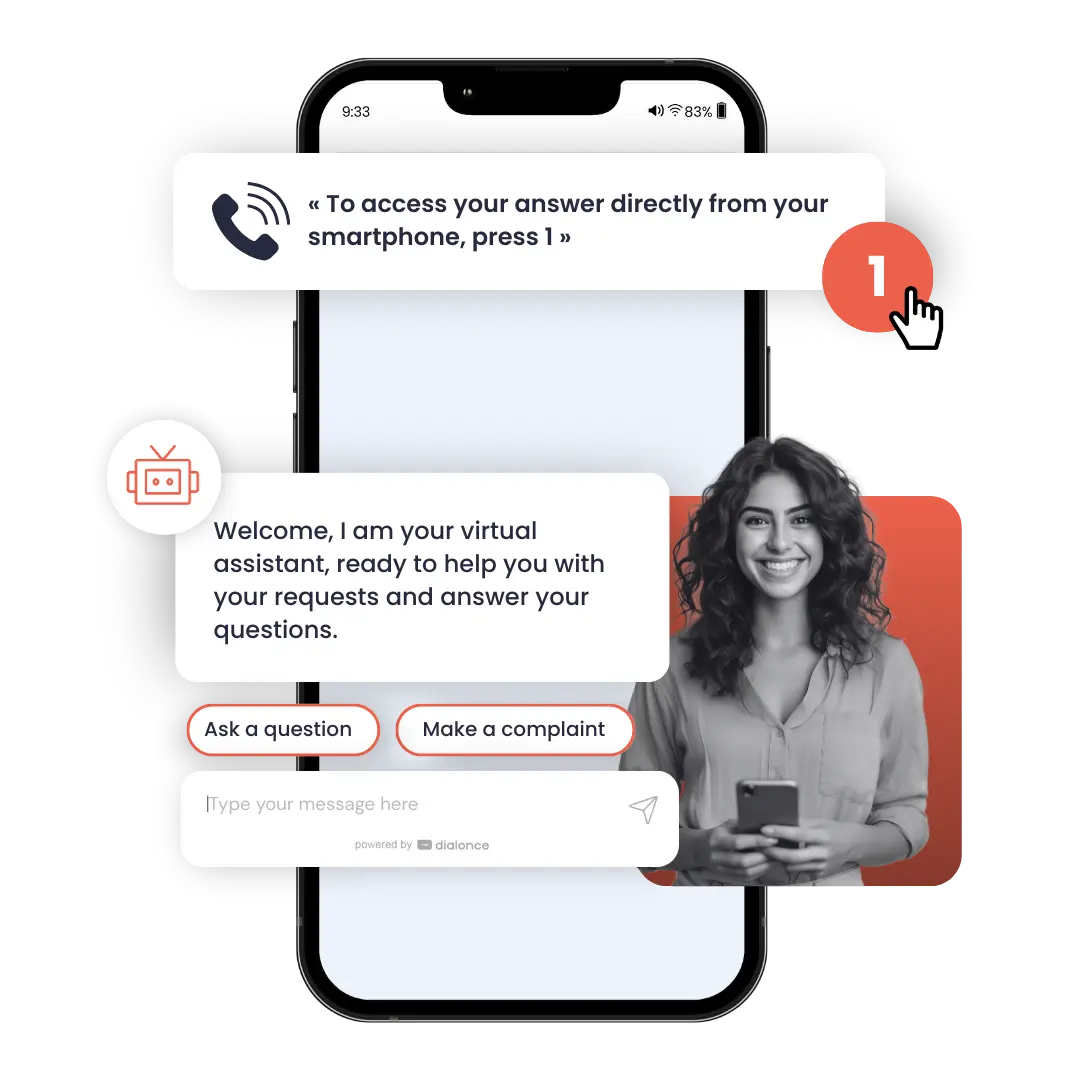
| Common Use Cases | Key Benefits |
|---|---|
| Document submission | Reduction of avoidable calls |
| Process tracking | Reduced waiting times |
| Access to essential information | Improved reachability |
| Digital journeys after a call | Fewer transfers |
| Managing contact volume peaks | More availability for complex requests |
"Thanks to DialOnce’s orchestration platform, we improved our answer rate, increased self-service usage for order tracking and repair tracking, and also improved our unit cost."
Christophe Famechon
Customer Relations Director, Fnac Darty











AI projects in customer service often fail for the same reasons: unreliable responses, customer journeys that are difficult to evolve, poor continuity between channels and limited visibility into actual performance. DialOnce AI agents were specifically designed to help customer service teams maintain control over their journeys, content and service quality.
The platform centralizes the management of journeys, scenarios and content, making it easier to adjust responses, identify friction points and continuously optimize customer journeys based on usage and contact volumes. Teams can progressively improve performance without relying on complex projects or heavy update cycles.
DialOnce also stands out through its ability to orchestrate interactions between voice, digital channels and advisors in order to deliver a smoother and more consistent experience across every touchpoint, while addressing the challenges of security, compliance and data governance in demanding high-volume contact environments.