Generative AI chatbot: revolutionize your customer relationship
With the rapid evolution of artificial intelligence, generative AI chatbots have become essential for businesses looking to improve their customer relationships. These tools, capable of understanding and responding in a natural and context-aware manner, offer a personalized experience while reducing operational costs. Human interactions are thus complemented by advanced technological solutions, enhancing overall efficiency and service quality. Generative AI chatbots, for example, provide 24/7 availability, reduce wait times, and accurately analyze customer needs. In this article, we explain why these technologies have become indispensable and how they can transform your customer service and your business.
What Is a generative AI chatbot?
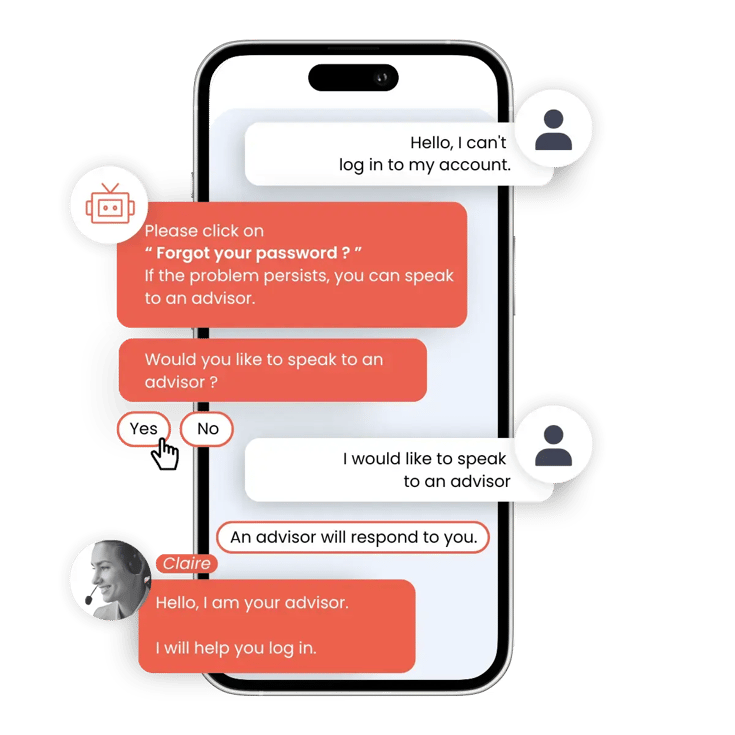
A chatbot is a computer program designed to simulate a conversation with human users. It can answer questions, provide information, or guide users through their tasks. Traditional chatbots use predefined scripts and rules to interact with users, which often limits their flexibility and their ability to respond contextually.
A generative AI chatbot, on the other hand, is a much more advanced solution. It relies on artificial intelligence models, such as GPTs (Generative Pre-trained Transformers), which are capable of generating text on their own. Unlike traditional chatbots, which are often limited to pre-programmed responses, generative AI chatbots have several more advanced capabilities, such as the ability to:
-
Understand the context and nuances of conversations: they can interpret complex requests and tailor their responses based on the user’s tone and intentions
-
Produce creative and tailored responses: their ability to generate natural language allows them to offer a much more engaging and effective customer experience.
-
Continuously learn from interactions: each conversation enriches their knowledge base, enabling constant improvement.
This technology relies on complex algorithms capable of analyzing massive amounts of data, such as conversation histories, user behavior, and external knowledge bases. That’s why generative AI chatbots are able to provide accurate, relevant, and real-time responses. They play a crucial role in industries where customer experience is essential, such as e-commerce, tourism, finance, and public services. Their adaptability allows them to handle a wide range of use cases, from automated technical support to personalized recommendations and lead qualification. They can also help reduce human error, thereby improving reliability and customer satisfaction.
According to our study, 71% of companies consider generative AI an essential tool for optimizing the customer experience.
How do generative AI chatbots work?
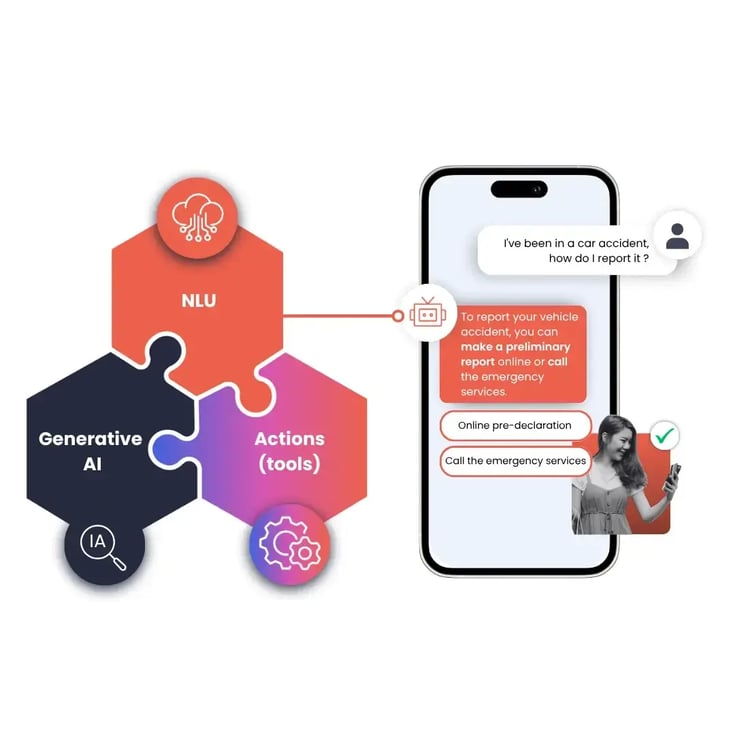
Generative AI chatbots rely on various technologies such as:
GPT (Generative Pre-trained Transformer)
like the one used in ChatGPT, provides contextual and creative responses, drawing on billions of parameters to understand the nuances of human language. This technology enables more fluid and natural communication.
RAG (Retrieval-Augmented Generation)
combines text generation with document retrieval to provide more accurate responses. This ensures that responses are up-to-date, based on factual information and your own databases.
Decision trees
optimize the user journey by guiding conversations in a structured way. These trees allow the chatbot to ask relevant questions to quickly identify the user’s specific needs, thereby improving the efficiency of interactions.
Supervised machine learning
This method enables chatbots to improve based on labeled data, making them more accurate in recognizing user intent and generating relevant responses.
Natural Language Processing (NLP)
NLP enables a more detailed analysis of user messages, facilitating a better understanding of subtleties such as humor, sarcasm, or typos. It is also this technology that allows for a nuanced understanding of the customer’s intent that is, their reason for contacting the chatbot.
Integrated security systems
they now include advanced protocols to protect sensitive data, ensuring compliance with regulations such as the GDPR.
These technologies are often combined with advanced data analysis tools, such as reinforcement learning, to refine interactions over time. For example, by monitoring which responses receive the highest ratings from users, the chatbot can continuously improve and deliver an optimal customer experience. The integration of “LLM as a judge ” ensures greater efficiency in building what is known as a “trustworthy” AI. This solution allows for the monitoring and validation of responses generated by the AI agent, ensuring they meet predefined criteria (ethical, functional...). This approach guarantees, in particular, adherence to existing knowledge, a high resolution rate, and an optimized user satisfaction score.
These technological advances enable companies to integrate generative AI chatbots into complex systems while ensuring their scalability and relevance. As a result, a chatbot can evolve from a simple customer support tool into a virtual advisor capable of handling complex tasks such as dispute resolution or the customization of sales offers.
Learn more about the technologies behind generative AI chatbots!
Why integrate them into your customer relationship management?
Companies are constantly looking for ways to improve customer relations while reducing costs. Generative AI chatbots are emerging as an ideal solution, offering a unique combination of efficiency and personalization. Here’s how they can help your business:
24/7 availability
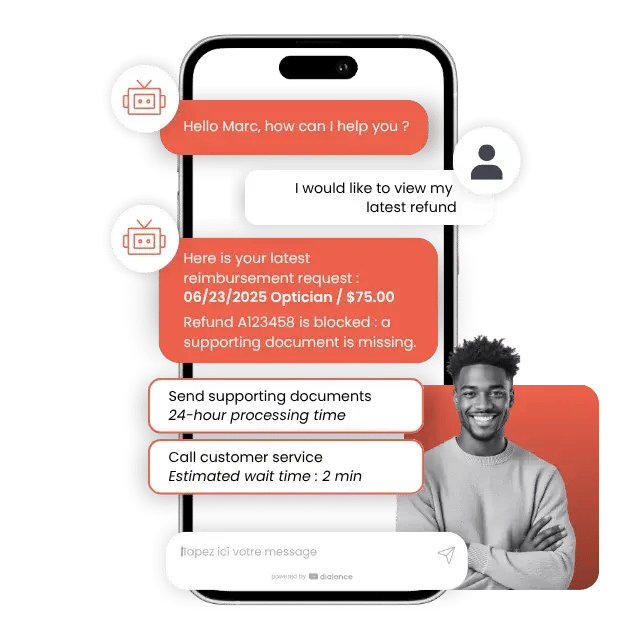
Generative AI chatbots can instantly answer customer questions at any time of day or night. This improves customer satisfaction by reducing wait times. They can also adapt to a multilingual environment, ensuring smooth interactions with diverse audiences.
Reduced operational costs
By automating routine interactions, companies can reduce their customer service expenses and redirect their human resources to higher-value tasks. This strategy also significantly reduces the number of incoming calls, thereby lightening the load on contact centers. By reducing operating costs through better resource management and the elimination of repetitive processes, companies can improve their overall productivity. As a result, automation becomes a strategic tool for optimizing performance while delivering a high-quality customer experience. Following the implementation of generative AI chatbots for our clients, we found that they increased productivity by an average of 20% and reduced operating costs by 20%.
Personalized the customer experience
Chatbots analyze conversation histories and user preferences to provide personalized recommendations, thereby increasing the likelihood of conversion.
Improved team productivity
By handling repetitive tasks, they free up time for remote customer service representatives, allowing them to focus on strategic activities such as managing complex situations.
Multichannel engagement
Generative AI chatbots can interact across multiple platforms, such as websites, social media, and mobile apps, ensuring a consistent and accessible experience for customers, regardless of the channel they use.
-
In the future, we expect AI to be able to ask additional questions for a better understanding of the intention (...) for example, choosing a preferred mode of transport to suggest the best route. That's one of the reasons why we went for this type of product, because we think we're just at the beginning!
Gaëtan Bultez
Customer Service Director RATP
How to deploy a generative AI chatbot?
Generative AI chatbots offer a unique opportunity to improve customer relationships while automating routine processes. Implementing them may seem complex, but by following a few key steps, you can transform your customer interactions into a seamless and personalized experience:
Identify your needs: identify pain points in your customer relationships.
Choose the right solution: opt for a chatbot that can easily integrate with your existing systems and cover all your communication channels.
Customize the chatbot: configure it according to your business-specific requirements by integrating your standard scenarios, your language guidelines, and automation workflows tailored to your needs.
Integrate it with your business tools and information system: ensure the chatbot can interact effectively with your business tools such as CRM, CCaaS, and other solutions you use to guarantee optimal data synchronization.
Test and optimize: make adjustments based on customer feedback and performance metrics.
Monitor performance continuously: implement regular monitoring to identify new opportunities for improvement and update the chatbot in line with technological advancements and your customers’ needs.
Learn more about the benefits of implementing a generative AI chatbot in our article: The Impact of AI Chatbots on the User Experience.
To learn more about how to integrate a generative AI chatbot into your business, check out our practical guide: How to Create Your Own Generative AI Chatbot Without Coding.
What are the best practices for improving your generative AI chatbot?
To get the most out of generative AI chatbots, it’s essential to follow a few key recommendations that will ensure their effectiveness and relevance:
-
Choose an omnichannel chatbot: make sure your chatbot can interact across multiple channels (website, social media, mobile apps).
-
Ensure data security: protect users’ sensitive information with robust security protocols.
-
Train the chatbot with specific scenarios: enrich it with relevant data to improve its understanding of use cases.
-
Measure performance (KPIs): track metrics such as first-contact resolution rate and customer satisfaction.
Learn more about best practices for training a generative AI chatbot here!
Case Study: How RATP Uses Generative AI to Streamline Inbound Customer Contacts
Real-world examples of business use cases
Generative AI chatbots are revolutionizing customer interaction by providing innovative solutions tailored to each industry. Here are a few examples of how these technologies are being used in real-world business scenarios:
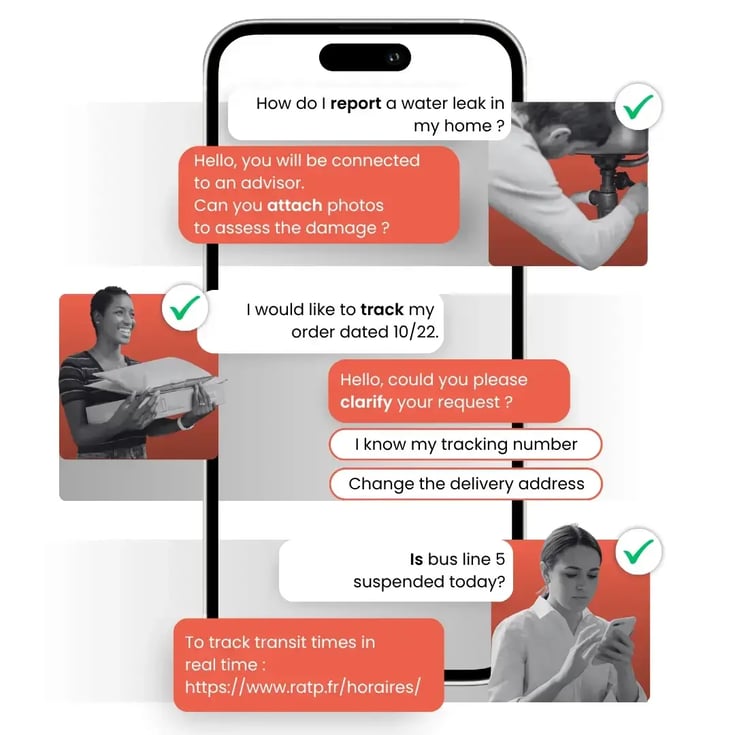
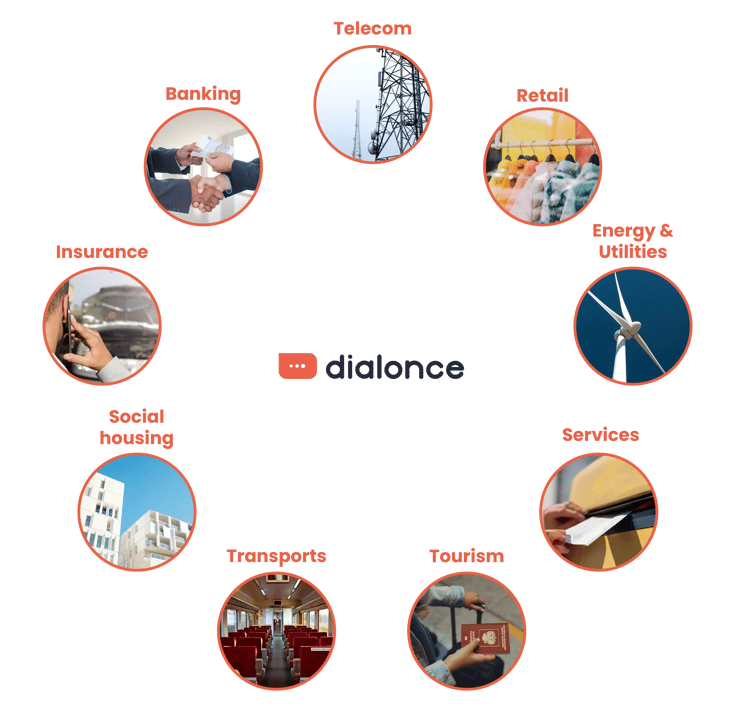
In the banking sector, these technologies enable the handling of routine requests such as balance inquiries, transaction histories, and loan simulations. They also enhance security by providing fast and accurate authentication while educating customers about financial products.
In the insurance industry, chatbots can help customers file a claim, track the status of their case, or understand the terms of their policies. They also help prevent fraud by analyzing suspicious behavior and quickly alerting customers to unusual transactions.
In the tourism sector, they can offer personalized recommendations on destinations based on travelers’ preferences. They can also facilitate ticket reservations and provide practical information on schedules and itineraries, making travel planning smoother and more efficient.
In e-commerce, these chatbots can guide customers throughout their purchasing journey. They are able to analyze preferences and purchase history to suggest targeted products, thereby increasing the likelihood of conversion while enhancing customer satisfaction.
In the transportation sector, generative AI agents simplify the management of incoming inquiries. They automate responses to frequently asked questions such as schedules or route changes thereby reducing the workload on call centers while providing fast and accurate service.
These examples illustrate how generative AI chatbots can be tailored to meet the specific needs of different industries, thereby improving the customer experience and operational efficiency.
Challenges and limitations of generative AI chatbots
Despite their many advantages, generative AI chatbots present certain challenges. For example, managing sensitive data is a major concern, as mishandling it can jeopardize user privacy. It is essential to adopt strict security protocols to prevent the risk of data leaks or misuse. Integrating them into certain industries can also be complex, requiring specific adaptations to ensure optimal effectiveness. For example, in the healthcare sector, chatbots must comply with strict regulations such as the GDPR and HIPAA. This complexity can slow down their deployment and require additional investments.
Another frequently discussed challenge is the issue of replacing human interactions. Although these agents can automate many tasks, some customers still prefer direct interaction with a human agent for complex issues or sensitive situations. Striking the right balance between automation and human intervention is crucial for maintaining a satisfactory customer experience. Generative AI chatbots can sometimes produce unexpected or inaccurate responses, often referred to as“hallucinations.”This unpredictability, linked to their machine learning, can undermine the credibility of the company using them. It is therefore necessary to implement a system of human oversight and regular model updates to ensure their reliability.
Despite these challenges, the opportunities offered by AI agents remain considerable. A well-balanced approach and rigorous management of their limitations allow companies to make the most of them while minimizing risks.
Finding the right partner to tackle your AI challenges
To address these challenges and fully leverage the potential of AI agents, it’s essential to work with the right partner. Choosing a skilled professional with the right tools can make all the difference. Whether you’re integrating AI into your business tools (CRM, CCaaS...) or centralizing your scattered knowledge, tailored support ensures optimal customization and regulatory compliance. To choose the right partner, it’s essential to ensure they have solid technical expertise capable of meeting the integration requirements with your existing tools. They must also understand the specifics of your industry and offer ongoing support to optimize your tools. Also, choose a partner that adheres to compliance standards such as the GDPR and guarantees a hands-on approach while supporting local innovations. With the right partner, you’ll benefit from high-quality support to guide you, optimize your processes, and turn your ambitions into tangible achievements.
In 2025, generative AI chatbots will emerge as essential tools for any business looking to improve its customer relationships. Offering 24/7 availability, a personalized experience, and significant cost savings, they perfectly meet the needs of modern users. Integrating these technologies ensures greater customer satisfaction and a sustainable competitive advantage. However, it is essential to address the challenges associated with their implementation, particularly the protection of sensitive data and the monitoring of responses to prevent errors or bias. Rigorous management will thus maximize their benefits while minimizing risks.
Looking ahead, AI chatbots are evolving into true intelligent agents. We are entering an era where agent-based AI and multi-agent systems enable even more advanced collaboration between machines and humans. These new generations of agents no longer simply answer questions; they take initiative, coordinate complex actions, and adapt their interactions based on the environment. This potential opens up immense opportunities for businesses, redefining how they interact with their customers and manage their internal processes.
At DialOnce, we know that going live in a demanding environment raises some key questions:
-
How can we understand and handle a large number of customer intents?
-
Should AI respond directly or route the customer to an existing workflow?
-
How can you integrate AI with your tools (CRM, CCaaS...) and your IT system?
-
How can you centralize knowledge that is often scattered?
Three key factors determine the success of an AI-powered customer relationship project:
-
A high-performance solution that integrates seamlessly with your systems.
-
AI expertise to fully leverage its potential while taking your challenges and constraints into account.
-
Expertise in customer relations, because it is by understanding your needs and those of your customers that we can deliver optimal experiences.
For 10 years, DialOnce has combined these areas of expertise with a “Made in France” approach, a guarantee of quality, reliability, and local support.