Agent IA vocal : automatisez votre service client avec l’IA
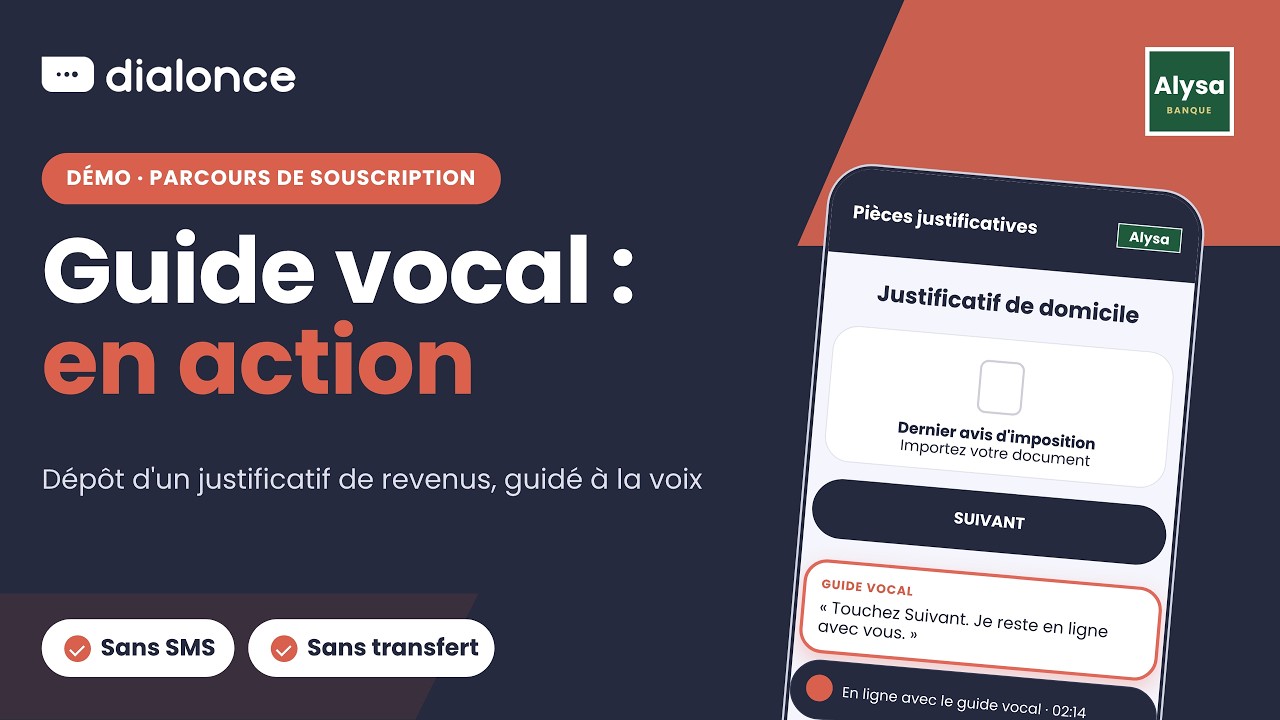
Reduce your Level 1 calls and empower your customers: provide an immediate response, or direct them to the right department without hanging up.
Digital transformation is outpacing your customers. Your applications and online platforms are becoming more sophisticated, but a large portion of calls still involve Level 1 issues that customers can already resolve on their own.
50%
of the calls received are simple Level 1 requests, many of which can already be handled online.
As soon as the call comes in
The voice AI takes over for Level 1 scenarios from the very first second.
Step by Step
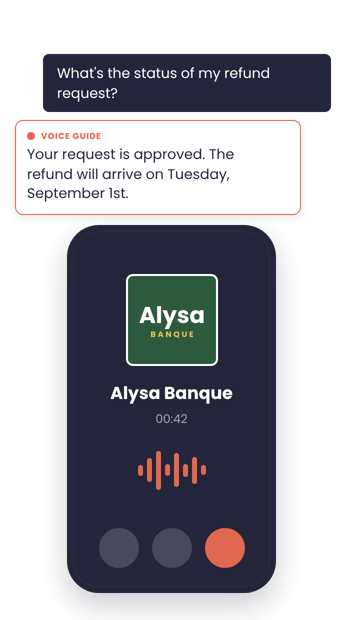
She guides the customer to the right online service, then helps them learn how to do it on their own.
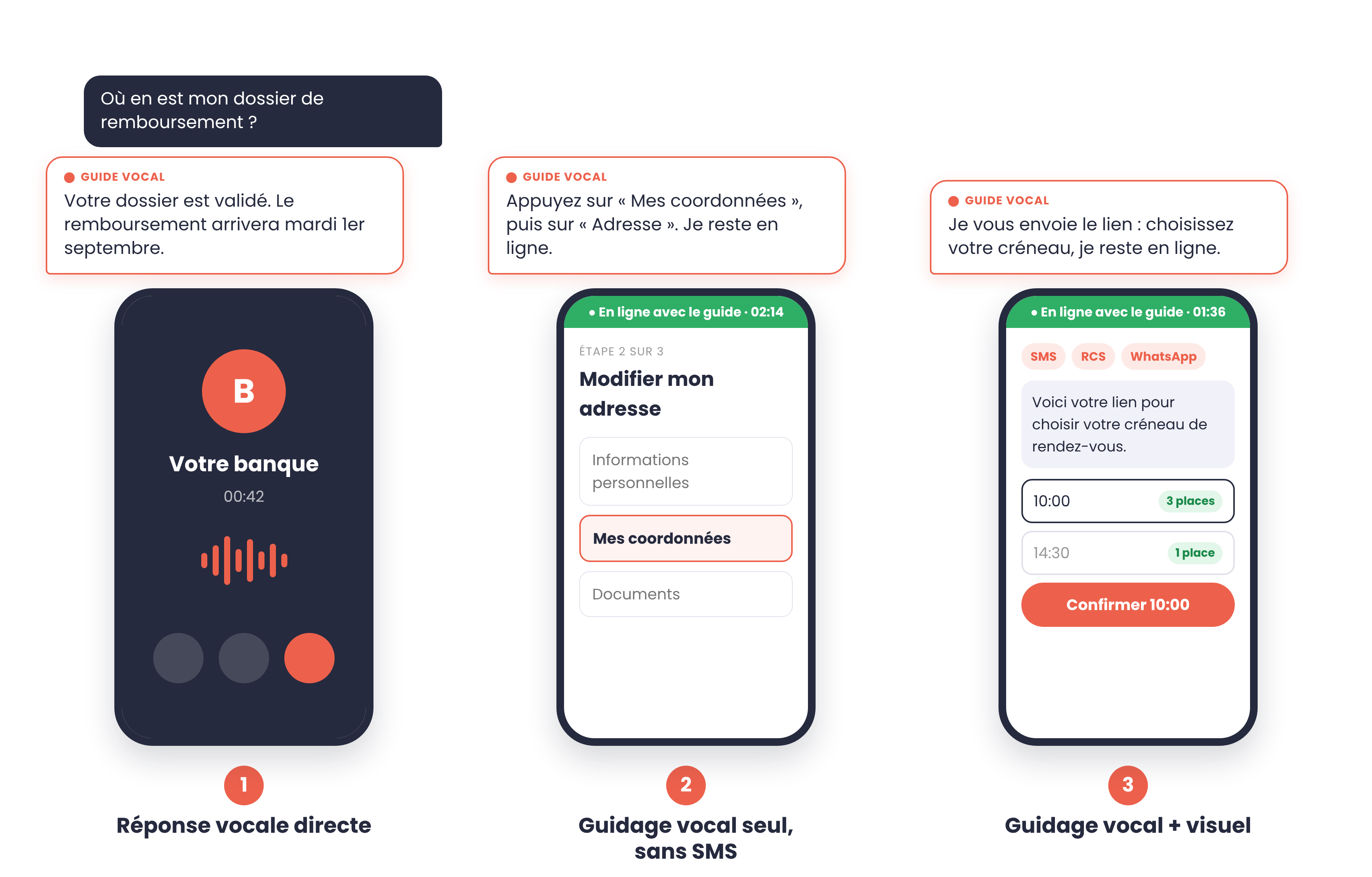
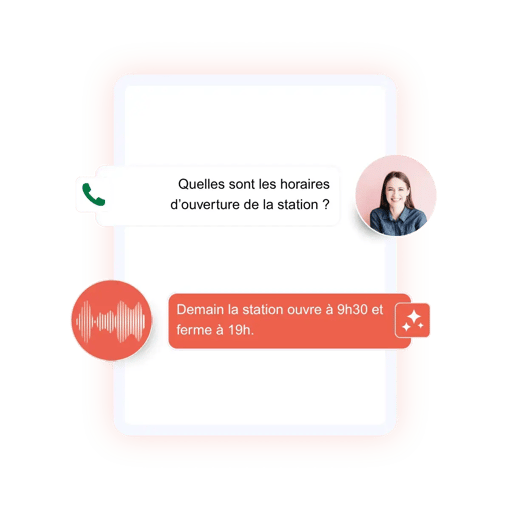
An AI voice guide is a conversational agent that guides the caller by voice throughout the call until their request is resolved. It understands the caller’s reason for calling in natural language, responds directly, or guides the customer step-by-step to a self-service channel via an SMS, RCS, or WhatsApp link.
The DialOnce voice guide is at the heart of self-service customer support: the voice assistant doesn’t just send a link—it stays on the line, helps reduce Level 1 calls, and drives self-service adoption. It complements the visual IVR and extends the capabilities of DialOnce’s voice AI agent.
After assessing the nature of the inquiry, the voice assistant selects the most effective mode. Sensitive requests are transferred to an agent along with the context, either in real time or via a callback.
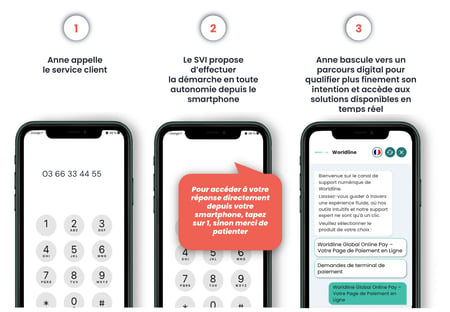
The visual IVR directs the caller to the right place; the voice guide ensures they get there and captures those who don’t open the text message. Out of 100 Level 1 calls, the same starting point yields two paths.
The rest call back or give up: the customer is left alone in front of the screen.
We reach out to those who didn’t click, reduce drop-off rates, and help users become self-sufficient.
If hearing an answer is enough, voice does the job. As soon as you need to show, capture, choose, save, or secure something, visuals become necessary.
Banking
Voice alone is enough
Branch hours and appointments, account status, fees, and limits
To be coordinated
Card cancellation, account opening, complaints
Visuals matter
Check accounts, transfers and bank details, sign contracts
Insurance
Just use your voice
Claim status, questions about coverage, appointment reminders
To be coordinated
Claim filing, quotes, and policy purchase
Visuals are key
Photos and damage reports, certificates, changes to coverage
Energy
Just a voice call
Request status, technician appointment reminders, reporting a outage
To coordinate
Moving, changing plans, billing complaints
Visuals are key
Bills, meter readings, payment schedules, usage tracking
Public sector
Just speak up
Hours and access, status of a request, callback request
To be coordinated
Submitting a request, filing a complaint, scheduling an appointment with documents
Visuals are key
Supporting documents, certificates, payment, digital ID
Combining voice with visuals has an impact on four key areas, all of which can be measured in your data.
More self-service
Immediate voice responses for simple inquiries and re-engagement of users who don’t click on text messages.
Better conversion
Voice removes barriers in the digital journey: fewer drop-offs.
Continuous improvement
Voice interactions reveal friction points and measure satisfaction.
Reachability
Available 24 hours a day, with qualified call routing and context provided to the agent.
The voice guide integrates with your phone system and tools without requiring a major project. DialOnce is a French company: the AI is designed, operated, and hosted in France.
An AI voice guide is a conversational agent that provides voice-based assistance to the caller throughout the call until the request is resolved. It understands the caller’s reason for the call in natural language, responds directly, or guides the customer step by step to a self-service channel via an SMS, RCS, or WhatsApp link.
A voicebot responds to voice commands, while a visual IVR directs the caller to a digital journey via text message. The AI voice guide combines both: it identifies the reason for the call, responds directly or sends a link, and then stays on the line to guide the customer through the rest of their journey.
After identifying the issue, the voice guide sends a link to the correct step-by-step instructions and then guides the customer step by step, via voice, through the app or website. The guide remains on the line until the task is complete, and the customer learns how to do it on their own next time.
Level 1 requests, which can already be handled online: case status, schedules, scheduling appointments, viewing account information, bank account details, certificates, or invoices. Sensitive or complex requests are forwarded to an advisor along with the context of the interaction, either in real time or via a callback.
No, they complement each other. The visual IVR directs the caller to the right place, while the voice guide ensures they get there and captures those who don’t open the text message. Out of 100 Level 1 calls, the example shown above increases the number of customers who complete the process from about 45 to about 72.
Combining voice with video has an impact in four key areas: increased self-care, improved conversion with fewer drop-offs, continuous improvement driven by the friction identified through voice interactions, and 24/7 availability. These benefits can be measured using your own data.
No. The voice guide works for all calls—mobile, landline, or anonymous—both in France and internationally. The link is sent via SMS, RCS, or WhatsApp, depending on your preference, and when no digital process is required, it responds directly to your voice.
The voice guide connects to your phone system and tools without requiring a major project. DialOnce integrates with Diabolocom, Genesys, Odigo, Kiamo, Five9, NICE, Axialys, RingCentral, Salesforce, and Zendesk, among others.
Yes. DialOnce is a French company: the AI is designed, operated, and hosted in France (Scaleway).